The Supporting Cast
Twenty plants that don’t make headlines — and the one that didn’t make it
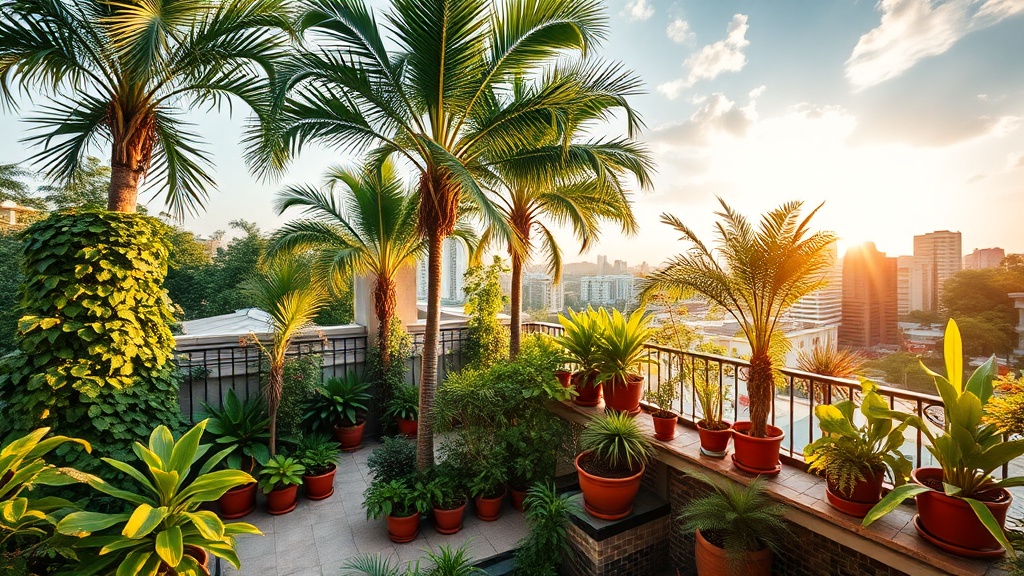
The Backbone
Not every plant in the garden has a dramatic story. Some just grow. They respond to feeding, benefit from pH correction, and carry on doing what they do — providing structure, greenery, and the quiet foundation that makes the garden a garden.
These are those plants. Documented briefly, because honest reporting means noting what’s unremarkable alongside what’s extraordinary.
The Palms — Group A
Areca palms (10) + Lipstick palms (10)
Twenty palms. They form the vertical structure of the garden — the tall elements that create height, shade, and the feeling of being in a garden rather than on a roof.
| Aspect | Detail |
|---|---|
| Treatment | NPK (300–400g) + Epsom salt (100g) + Ferrous sulfate (1 tbsp) |
| Frequency | Every 3–4 weeks |
| Response to pH correction | Steady improvement — greener fronds, more vigorous |
| Drama | None. They just grow. |
Palms are patient plants. They don’t bloom suddenly or die dramatically. They put out one new frond at a time, slowly increasing in height and fullness. The ferrous sulfate helped — greener fronds suggest better iron and magnesium uptake — but the change was gradual, not the overnight transformation seen in ixora or night jasmine.
They’re the backbone. Every garden needs one.
The Ficus — Group E
Two ficus plants
The ficus surprised me. After pH correction and regular feeding, they pushed out a flush of new growth that was visually striking — light green new leaves against the dark green of mature foliage.
From the January 17th update:
“The ficus’s both of them seem to show lots of new shoots, their new shoots are a beautiful light green in stark contrast with its mature dark green leaves.”
| Aspect | Detail |
|---|---|
| Treatment | NPK (100–150g) + Ferrous sulfate (1 tbsp) |
| Frequency | Every 2–3 months |
| Response | Beautiful new growth flush |
| Maintenance | Minimal — they largely take care of themselves |
Ficus are Group E — light feeders. They don’t need much, and they don’t complain much. But give them corrected soil chemistry and they show you what they’re capable of.
The Flowering Vines and Shrubs — Group B
Mussaenda (1), Tecoma capensis (2), China doll (2), Allamanda (1), Petrea/Sandpaper vine (1)
These seven plants share the same feeding group: NPK + DAP + Epsom salt + Ferrous sulfate. They’re the supporting cast of the flowering garden — not as dramatic as bougainvillea, not as fragrant as night jasmine, but collectively providing color and variety across the terraces.
| Plant | Qty | Feeding | Notes |
|---|---|---|---|
| Mussaenda | 1 | Every 4–6 weeks | Pink bracts, steady grower |
| Tecoma capensis | 2 | Every 4–6 weeks | Orange trumpet flowers |
| China doll | 2 | Every 4–6 weeks | Fine-leaved, elegant form |
| Allamanda | 1 | Every 3–4 weeks | Yellow trumpets, vigorous |
| Petrea | 1 | Every 4–6 weeks | Purple cascading blooms |
None have had specific problems. They responded to the garden-wide pH correction with generally improved growth and flowering. The ferrous sulfate addition was the common factor — at pH 8, all of them were underperforming relative to their potential.
The Low-Maintenance Crew — Groups E & F
Pothos (5 walls), Peace lily (2), Rain lilies (10), Dwarf umbrella (1), Sansevieria (4), Bryophyllum (1)
These are the plants that ask for almost nothing. Light NPK dissolved in water every 6–8 weeks for Group E, barely anything for Group F. They tolerate a wide pH range, don’t attract many pests, and generally go about their business without requiring intervention.
| Plant | Qty | Group | Feeding frequency |
|---|---|---|---|
| Pothos | 5 walls | E | Every 6–8 weeks |
| Peace lily | 2 | E | Every 6–8 weeks |
| Rain lilies | 10 | E | Every 2–3 months |
| Dwarf umbrella | 1 | E | Every 6–8 weeks |
| Sansevieria | 4 | F | Every 3–4 months |
| Bryophyllum | 1 | F | Every 3–4 months |
The pothos deserve a mention — five walls of them, creating green vertical surfaces that soften the architecture. They’re practically indestructible. Every garden needs plants you can count on, and pothos are the most reliable plants I’ve ever grown.
The sansevieria and bryophyllum are in Group F — the “neglect-tolerant” category. They get a token feeding every few months and a half tablespoon of ferrous sulfate. They seem fine with this arrangement.
The One We Lost — Anthurium (Painters Plate)
One anthurium — dead
Not every story has a happy ending. The anthurium — sometimes called painters plate for its flat, heart-shaped red spathe — died. When I pulled it from the pot, the roots had tiny white worms on them.
Claude’s assessment:
| Possibility | Description |
|---|---|
| Fungus gnat larvae | Small white worms in wet soil — feed on roots and organic matter |
| Root mealybugs | White, slightly fuzzy, clustered on roots — suck sap |
The plant was likely already stressed — anthurium need humidity, good drainage, and indirect light. Root pests finished it off.
Lessons from the loss:
- Dispose of the infected soil — don’t reuse it
- Clean the pot with soap and bleach before reusing
- Inspect nearby plants (the peace lily is the same family)
- Check for fungus gnats flying near soil surfaces
- Let soil dry out more between waterings — larvae thrive in moisture
The peace lily, sitting nearby, was flagged for a root inspection as a precaution. So far it shows no symptoms, but the proximity warrants vigilance.
What the Supporting Cast Teaches
About systems: A garden is a system. The stars get the attention — the bougainvillea in full bloom, the passion fruit’s dramatic recovery. But the system works because twenty other plants are quietly doing their jobs. The palms create structure. The pothos soften walls. The rain lilies fill gaps. Remove the supporting cast and the stars have no stage.
About the pH unlock: The most consistent theme across every plant in this page is the same one that runs through the entire garden: pH correction improved everything. Not dramatically for these plants — they weren’t struggling the way ixora or Rangoon creeper were — but measurably. Greener fronds on palms. Better new growth on ficus. Slightly more vigorous flowering on the Group B shrubs. The ferrous sulfate was a rising tide that lifted all boats.
About losses: Twenty-four out of twenty-six plant types surviving and improving is a strong result. The anthurium loss and one bleeding heart vine loss are part of the honest accounting. Not everything can be saved. But documenting what went wrong — root pests in wet soil, intervention too late — means the same mistakes are less likely next time.
The Full Garden Tally
| Category | Count | Plants |
|---|---|---|
| Thriving | 22 | Palms, hibiscus (9), bougainvillea, night jasmine, ficus, mussaenda, tecoma, china doll, allamanda, petrea, pothos, sansevieria, bryophyllum, rain lilies, dwarf umbrella, wedelia, curtain creeper |
| Recovering | 3 | Passion fruit, affected Rangoon creepers (2) |
| Under observation | 2 | Yellow hibiscus, rose (between flushes) |
| Surviving | 1 | Bleeding heart vine (1 of 2) |
| Lost | 2 | Anthurium, bleeding heart vine (1 of 2) |
| Total | 26 |
Survival rate: 92%. Recovery rate climbing.
Part of the AI in the Garden series — documenting what happens when artificial intelligence meets living things.