Plumeria: Clusters on Every Stem
The slow bloomer that found its formula
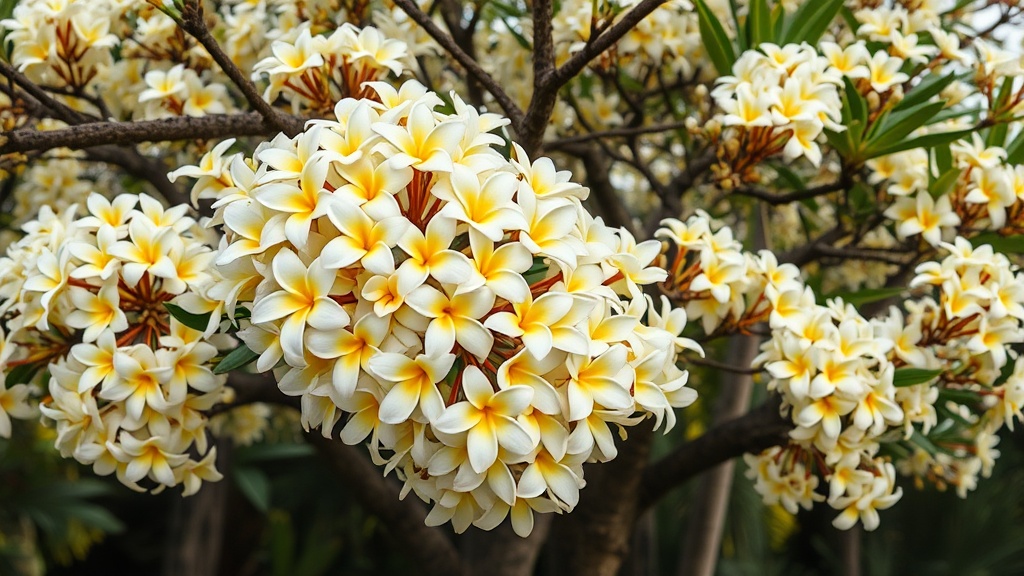
The Plant
One plumeria — frangipani — on the rooftop. A tree that carries a specific kind of nostalgia in tropical gardens. The thick, succulent branches. The waxy leaves. And the flowers: five-petaled, fragrant, the kind that gets threaded into garlands and floats in temple water bowls across Southeast Asia.
Mine was growing fine. Healthy-looking, putting out leaves seasonally, dropping them in the dry months as plumeria do. But the flowering was underwhelming. Scattered blooms, not the dense clusters the tree is capable of. Something was missing.
The Diagnosis
When Claude categorized my plants into feeding groups, plumeria landed in Group C: Bloom-Focused and Stress-Lovers — alongside bougainvillea, passion fruit, and bleeding heart vine.
The reasoning: plumeria, like bougainvillea, bloom best when pushed toward reproduction rather than vegetative growth. The treatment:
- DAP (150–200g) — phosphorus for flower formation
- Potash (50–100g) — potassium for bloom quality and root strength
- Ferrous sulfate (1 tbsp) — pH correction
- Frequency: every 6–8 weeks
- Note: skip feeding when the tree is leafless (dormant)
The critical difference from my previous approach: I had been feeding plumeria with general-purpose NPK, which contains nitrogen. Nitrogen drives leaf growth. For a tree you want to flower, that’s the wrong signal.
The pH Factor
The garden-wide pH discovery changed the plumeria story, too. At pH 8, phosphorus — the nutrient most critical for flowering — becomes partially locked out. I was feeding DAP (diammonium phosphate), but the alkaline soil was limiting how much the tree could actually absorb.
Ferrous sulfate in the mix brought the pH down, making the phosphorus available. It was the same story playing out across the entire garden, plant after plant.
The Result
By January 17th, the plumeria was responding:
“Plumeria and Rose are showing a lot more flowers.”
And the user experience that prompted this whole documentation effort: flower clusters on every stem. Not single blooms at the branch tips, but dense clusters — the way a healthy, well-fed plumeria performs when everything aligns.
What Makes Plumeria Different
Plumeria has a natural annual cycle that makes it both forgiving and frustrating:
| Season | Behavior |
|---|---|
| Warm, humid months | Pushes leaves and flowers |
| Cool, dry months | Drops leaves, goes dormant |
| Post-dormancy | New leaf buds appear, then flower buds |
The window for influencing flowering is narrow — you need the right nutrients before the flower buds form. DAP and potash applied during the growing season set up the next flush. Miss the timing, and you get another season of leaves without flowers.
Claude’s advice: feed during active growth, skip during dormancy, and don’t feed with nitrogen when you want blooms.
What I Learned
About plumeria: It’s patient. Plumeria tolerates a lot — drought, poor soil, neglect — and still survives. But “surviving” and “thriving” are different states. The tree looked fine all along. It took targeted feeding to see what it was actually capable of.
About the right question: I never asked “why isn’t my plumeria flowering more?” specifically. It was part of a broader conversation about the entire garden. The AI categorized it, assigned it a feeding group, and the improvement followed from systematic treatment rather than targeted troubleshooting. Sometimes the answer appears when you ask about everything rather than one thing.
About patience with trees: Shrubs and vines respond to treatment in weeks. Trees respond in months. The plumeria was slower to show results than the bougainvillea or night jasmine, but the results — clusters on every stem — were worth waiting for.
Current Status
| Aspect | Status |
|---|---|
| Plants | 1 |
| Flowering | Dense clusters on stems |
| Treatment | DAP + Potash + Ferrous sulfate every 6–8 weeks |
| Dormancy | Skip feeding when leafless |
| pH | Correcting toward 6.5–7.0 |
| Biggest lesson | Feed for flowers, not for leaves |
Part of the AI in the Garden series — documenting what happens when artificial intelligence meets living things.