Passion Fruit: Crisis, Surgery, and Resilience
Bloom, infestation, amputation, recovery — the most dramatic story in the garden
Act One: The Quick Win
The passion fruit vine was one of the first plants I discussed with Claude. It wasn’t flowering. Just growing green, spreading its tendrils, putting out leaves — but no blooms, no fruit.
Claude’s suggestion was simple: potash. Potassium drives flowering and fruiting. The vine had been getting general-purpose NPK, which contains some potassium, but not enough for a fruiting vine that needs a strong flowering signal.
I applied potash. The response was almost immediate.
“Passion fruit — responding to potash.”
Within days, buds appeared. This was the garden’s first quick win — proof that targeted feeding works, that the AI’s diagnostic approach could produce visible results fast. It felt like magic, though it was just chemistry.
Act Two: The Infestation
Then everything went wrong.
I noticed the vine was covered in scale bugs. Not a few — a full infestation. Every green stem, every tender growing tip, armored with tiny brown bumps. Scale insects are among the most frustrating garden pests because their waxy shell protects them from nearly all contact pesticides.
I did the research. Claude confirmed what I found:
“Scale bugs are armored — their waxy coating protects them from most sprays. Pruning out infested sections is often the only effective solution.”
There was no spray that would save the green growth. The only option was surgery.
Act Three: The Surgery
I pruned everything. Every green, infested stem was cut back. What remained was the mature woody framework — thick stems with bark that the scale hadn’t penetrated. The vine went from lush and green to bare and skeletal in an afternoon.
It was hard to do. Three years of growth, cut away in an hour.
And then it bled. The cut stems dripped sap — steadily, visibly, for days. Walking past the vine, I could see the drops forming at every cut end and falling.
I told Claude about the sap with some worry. The response was reassuring:
“The sap dripping is actually a good sign — it means the plant is alive, vigorous, and has strong root pressure pushing water and nutrients upward. A weak or dying plant wouldn’t bleed like that.”
| Observation | Meaning |
|---|---|
| Sap dripping for a few days | Normal — plant is sealing the wound |
| Clear or slightly milky sap | Healthy |
| Dripping slows over 3–7 days | Wound is callusing |
The advice: let it be. Optionally dab cinnamon powder on the cuts as a natural antifungal. But mostly, patience.
Act Four: Recovery
The sap stopped after about a week. The wounds callused. And then — new life.
From the January 17th update:
“Passion fruit vines continue to sprout new leaves from the hard stem, the sap dripping has fully stopped, haven’t found any scale bugs on the hard vines during close inspection.”
New leaves emerging from the woody stems. No scale on the remaining structure. The surgical approach had worked — the infested tissue was gone, and the clean woody base was regenerating.
By January 31st:
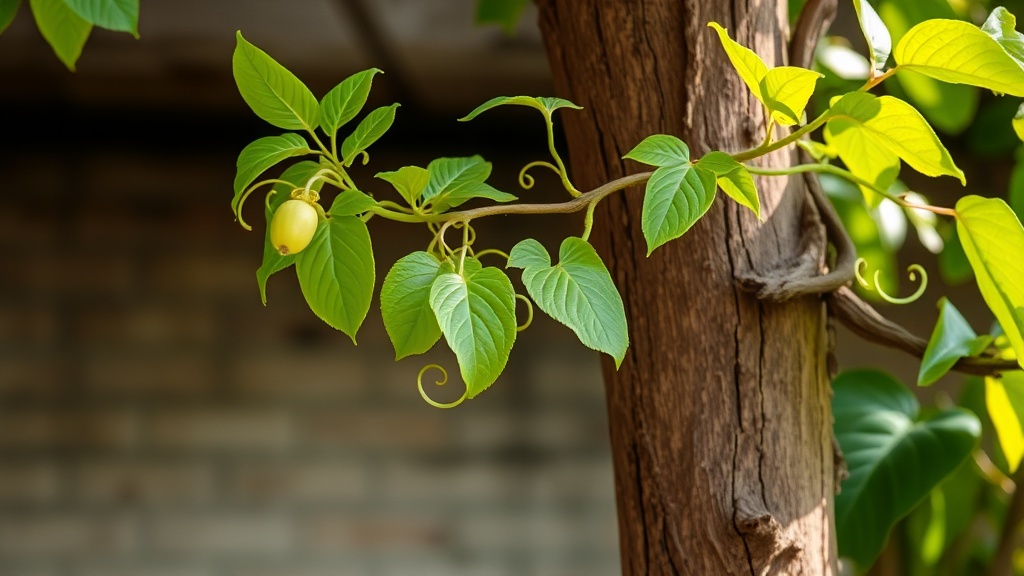
“The passion fruit vines are still popping out leaves, some new tender tendrils are trying to wrap around the support structure.”
Tendrils. The vine was reaching again — stretching toward the supports it would need to climb back to its former coverage. Not just surviving. Growing with purpose.
The Recovery Protocol
Claude laid out a feeding plan calibrated to the vine’s condition:
| Phase | Timing | Feed | Purpose |
|---|---|---|---|
| Post-prune | Immediately | Light NPK | Support new vegetative growth |
| Recovery | 4–6 weeks later | DAP + Potash | Shift back to flowering |
| Ongoing | Monthly | Ferrous sulfate | pH correction (soil was pH 8) |
The key: don’t push hard immediately. A recovering plant needs to rebuild leaf canopy before it can support flowering. Light nutrition first, bloom-focused feeding later.
Prevention
The scale infestation raised questions about how to prevent recurrence. Claude’s prevention strategy:
| Practice | Why |
|---|---|
| Neem oil spray monthly | Preventive — deters scale before they establish |
| Regular close inspection | Catch infestations early, when a few bugs can be wiped off |
| Good airflow | Dense, crowded growth harbors pests |
| Avoid excess nitrogen | Soft lush growth attracts scale |
| Alcohol wipe on stems | Dissolves waxy coating, kills on contact |
The most important lesson: inspect regularly. Scale bugs don’t appear overnight — they build up gradually. The infestation I found had been developing for weeks, probably longer, while I wasn’t looking closely enough.
The Bigger Story
The passion fruit vine also played a role in the Rangoon creeper diagnosis. The affected Rangoon creepers sat next to the passion fruit. When the scale infestation was discovered, Claude immediately flagged the risk:
“Are any nearby plants showing scale? They spread slowly but can hop to adjacent plants, especially other soft-stemmed vines.”
This led to the revised Rangoon creeper diagnosis — adding neem oil to the zinc and pH treatment as a precaution against scale crawlers that might have migrated. The passion fruit’s crisis informed the care of its neighbors.
Gardens are systems. One plant’s problem is another plant’s warning.
What I Learned
About decisive action: Sometimes the right treatment is the hardest one. Pruning three years of growth felt destructive. But the alternative — letting scale spread to the woody structure and eventually kill the whole vine — was worse. The AI helped me see that the woody base was healthy and the root system strong. The vine could come back from surgery. It couldn’t come back from a full infestation.
About reading signs: The sap dripping looked alarming but was actually diagnostic — a healthy sign. Without Claude’s reassurance, I might have panicked and done something counterproductive. In gardening, as in medicine, symptoms that look scary can be signs of healing.
About the arc of recovery: The passion fruit story isn’t over. It’s in the rebuilding phase — new leaves, new tendrils, reaching for supports. Flowering is months away. Full fruit production may take the better part of a year. Recovery from crisis isn’t instant; it’s a slow curve back toward health.
About potash and promise: The story started with a quick win — potash triggering immediate blooming. Then came the crisis. Then recovery. The full arc is a reminder that gardening isn’t linear. You solve one problem and another appears. You treat and wait. You prune and hope. The vine doesn’t care about your timeline.
Current Status
| Aspect | Status |
|---|---|
| Plant | 1 vine on support structure |
| Condition | Recovering — new leaves and tendrils from woody stems |
| Scale bugs | None found on remaining structure |
| Sap dripping | Stopped — wounds callused |
| Treatment | Light NPK now; DAP + Potash when growth is established |
| pH | Correcting with ferrous sulfate |
| Expected flowering | 2–3 months |
| Biggest lesson | Sometimes you have to cut away the past to save the future |
Part of the AI in the Garden series — documenting what happens when artificial intelligence meets living things.