Night Jasmine: Going Bonkers
From quiet wallflower to explosive growth
The Plant
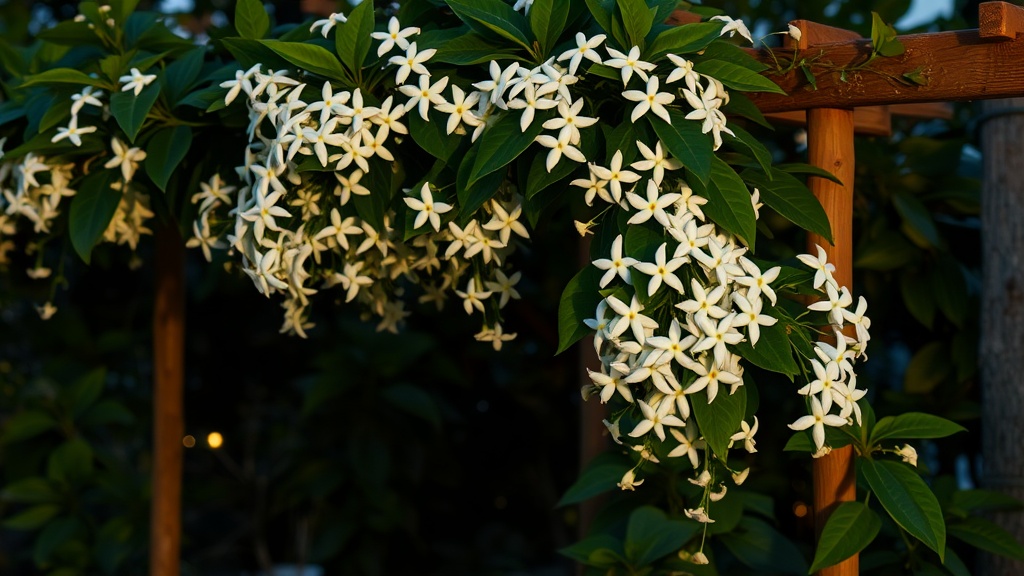
Nitya malli — Jasminum sambac — night-blooming jasmine. Two plants in the garden, trained as climbing vines. The flowers are small, white, star-shaped, and their fragrance in the evening is the reason most people grow them. In Indian and Southeast Asian gardens, night jasmine is as much about scent as sight.
For a while, mine were modest. Growing, but not urgently. Producing flowers, but not abundantly. Decent enough to keep, unremarkable enough to overlook.
The Treatment
When I sat down with Claude to build a complete feeding strategy for all 26 plant types in the garden, nitya malli was categorized into Group B: Flowering Vines and Shrubs — NPK + DAP + Epsom salt + ferrous sulfate.
The recipe:
- NPK (100–150g) for general nutrition
- DAP (50g) for phosphorus — flowering support
- Epsom salt (optional) for magnesium
- Ferrous sulfate (1 tbsp) for pH correction — the big unlock
The feeding frequency: every 4–6 weeks. Nothing exotic. But the ferrous sulfate was the game-changer nobody expected.
What Happened
By the January 17th garden update — about three weeks after starting the corrected treatment — I reported:
“Nitya malli seem to have a growth spurt, its shoots shot up more than a feet long, lot more leaves, buds and flowers.”
Claude’s immediate concern: wind. The new shoots were soft, long, and vulnerable. Singapore rooftop gardens get significant wind, and these tender stems could snap. The advice: tie them loosely to supports using soft cloth or jute twine while still flexible. Direct them where you want them to grow.
Two weeks later, on January 31st:
“Nitya malli is going bonkers and pumping shoots out every which way, looks so good, copious amount of flowers as well.”
Not just growing. Going bonkers. Shoots in every direction. Flowers abundant enough to scent the evening air across the entire terrace.
Why It Worked
The night jasmine had been nutrient-starved — not because I wasn’t fertilizing, but because the soil pH of 8 was locking out key nutrients. The plants were getting fed but couldn’t eat.
Once ferrous sulfate brought the pH down toward the 6.5–7.0 range, the existing fertilizer became available. It was like removing a cork from a bottle — everything that was held back came rushing out.
The DAP provided the phosphorus push for flowering. The NPK kept the general nutrition strong. But the ferrous sulfate was the key that unlocked the door.
What I Learned
About night jasmine: They’re vigorous growers when conditions are right. The “quiet” growth I was seeing wasn’t the plant’s personality — it was the plant being held back by invisible chemistry. Once the constraint was removed, the real personality emerged: exuberant, prolific, fragrant.
About the pH story: This plant more than any other demonstrated the power of the pH correction. Nothing else changed in its care — same location, same light, same watering schedule. The only variable was soil chemistry. The result was dramatic.
About managing success: A plant that grows explosively needs guidance. The new shoots were beautiful but directionless. Without tying them up and training them along supports, they’d break in the wind or grow into tangles. The AI anticipated this — not because it could see the wind, but because it understood the growth pattern and the rooftop environment I’d described.
Current Status
| Aspect | Status |
|---|---|
| Plants | 2 |
| Growth | Explosive — multiple long shoots |
| Flowering | Copious — evening fragrance |
| Treatment | NPK + DAP + Ferrous sulfate every 4–6 weeks |
| Maintenance | Tying new shoots to supports, directing growth |
| pH | Correcting toward 6.5–7.0 |
| Biggest lesson | The quiet plant wasn’t quiet — it was constrained |
Part of the AI in the Garden series — documenting what happens when artificial intelligence meets living things.