Ixora: The Plant That Started Everything
From stunted and infested to tall and budding — without a single drop of pesticide
The Problem
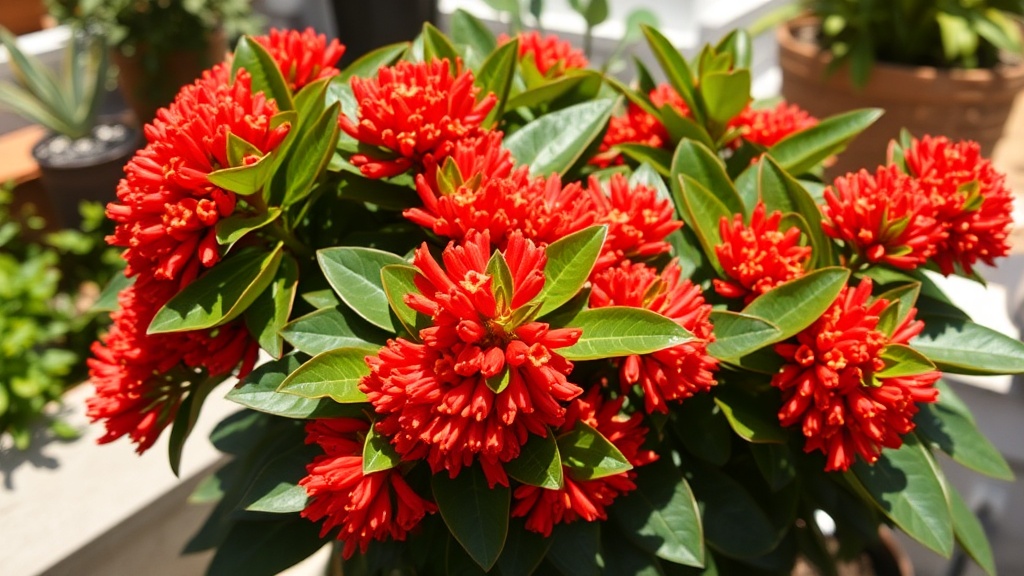
Three ixora plants. They should have been growing tall, producing those signature dense clusters of tiny flowers — red, orange, the kind you see in every tropical garden in Southeast Asia. Mine were doing none of that.
They were stunted. Short. Not dead, but not living with any enthusiasm. And they were being eaten alive — tiny black and grey bugs covered the shoots. Every time new growth emerged, the bugs found it first. The shoots would curl, brown, and die before they had a chance.
I had been fertilizing. Watering on schedule. Doing everything the gardening books say. Nothing worked.
The Diagnosis
When I described the ixora to Claude — stunted growth, persistent bugs, no response to standard fertilizer — the analysis went deeper than pests.
The question wasn’t how to kill the bugs. The question was why are the bugs winning?
Ixora are acid-loving plants. They thrive at pH 5.5–6.5. At the time, I didn’t know my soil pH. But Claude suspected alkaline conditions based on the symptom pattern:
- Stunted growth despite regular feeding → nutrient lockout
- Persistent pest pressure → weakened plant can’t resist
- No response to NPK → the nutrients are there but unavailable
The prescription: acidify the soil. Bring the pH down so the plant can actually access the iron and other micronutrients it needs. The recommended product was sulfur.
The Happy Accident
I went to the garden shop and bought what I thought was elemental sulfur. It was greenish instead of the expected pale yellow, and nearly odorless instead of the sharp sulphurous smell I expected. I applied it anyway.
It worked — fast. Faster than elemental sulfur should work.
Weeks later, when I mentioned the color and smell to Claude, the diagnosis: I had accidentally bought ferrous sulfate (iron sulfate) instead of elemental sulfur.
This turned out to be better than what I intended:
| Product | What it does | Speed |
|---|---|---|
| Elemental sulfur | Bacteria slowly convert to acid | 4–8 weeks |
| Ferrous sulfate | Directly acidifies + provides iron | 1–2 weeks |
Ferrous sulfate gave the ixora both pH correction and iron supplementation simultaneously. Double benefit from a single purchase.
Sometimes luck helps the gardener.
The Transformation
By the time I tested the ixora pots with my daughter’s pH meter, they read pH 6 — exactly where ixora want to be. The rest of the garden was sitting at pH 8.
The ixora had been the canary in the coal mine. It was the first plant to get treatment, and the first to respond. By January 17th:
“Ixora seem to have grown at least half a foot, lots more buds are showing up with not many bugs on it, earlier, it was getting eaten alive with bugs, small tiny ones, black and grey, they seem to be missing from the leaves, new shoots are there without the bugs sucking up and killing the shoots.”
Half a foot of growth. Buds everywhere. And the bugs? Gone. Not treated with any pesticide — they simply disappeared.
The Lesson That Changed Everything
This is the observation that reshaped how I think about the entire garden:
Healthy plants resist pests. Nutrition is better than pesticides.
The bugs didn’t die. No one killed them. They left — because a well-nourished ixora is a harder target. The plant’s own defenses, powered by proper nutrition and correct soil chemistry, did what no spray could.
This single insight — fix the soil, and the pest problem fixes itself — is the most valuable thing AI has taught me about gardening.
The Cascade
The ixora success triggered everything that followed.
When the ferrous sulfate worked so dramatically on ixora, it raised a question: what if the other struggling plants have the same problem?
That question led to borrowing my daughter’s pH meter from a school science experiment. That led to testing every pot in the garden. That revealed pH 8 across the board — alkaline soil locking out nutrients in every single pot.
The ixora was patient zero of the pH correction. One plant’s success became the template for the entire garden.
| Event | What it triggered |
|---|---|
| Ixora treated with ferrous sulfate | Dramatic improvement |
| Noticed it worked fast | Investigated the product — discovered it was ferrous sulfate |
| Tested ixora pH: 6.0 | Wondered about other plants |
| Borrowed daughter’s pH meter | Tested everything |
| Found pH 8 garden-wide | Applied ferrous sulfate to all pots |
| Garden-wide improvement | Bougainvillea, hibiscus, night jasmine, Rangoon creepers all responded |
Three ixora plants. That’s where it all started.
What I Learned
About ixora: They are unforgiving of wrong pH. Most plants tolerate a range and muddle through. Ixora simply shut down. But that sensitivity made them the perfect diagnostic — they showed the problem first and most clearly.
About pests and nutrition: The instinct when you see bugs is to reach for pesticide. The AI reframed the question: bugs are the symptom, not the cause. Fix the underlying health of the plant and the symptom resolves. This applies far beyond ixora.
About cascading discoveries: Sometimes solving one small problem reveals a systemic issue. The ixora fix wasn’t just about three plants — it was the thread that, when pulled, unraveled the central mystery of why the entire garden was underperforming. AI helped me see the connection because it asked why the plant was vulnerable, not just how to kill the bugs.
About happy accidents: Buying the wrong sulfur product turned out to be the right decision. Ferrous sulfate was faster and more effective for my situation than the elemental sulfur I intended to buy. The garden doesn’t care about your shopping list — it cares about chemistry.
Current Status
| Aspect | Status |
|---|---|
| Plants | 3 |
| Growth | Half a foot taller, continuous new shoots |
| Flowering | Lots of buds, clustering |
| Pests | Gone — without pesticide |
| Treatment | NPK + Ferrous sulfate every 4–6 weeks |
| pH | 6.0 — at target |
| Role in the garden story | Patient zero — triggered the pH discovery |
Part of the AI in the Garden series — documenting what happens when artificial intelligence meets living things.