Bougainvillea: The Stress Lover
Less water, more flowers — the counterintuitive cure
The Problem
Five bougainvillea plants spread across the rooftop garden. Plenty of green growth, but flowers were sparse and inconsistent. I was treating them like every other plant — regular watering, regular NPK fertilizer, regular attention.
That was the problem. Bougainvillea don’t want regular attention.
What AI Told Me
When I described the situation to Claude, the advice was counterintuitive: stop being nice to them.
Bougainvillea are stress-lovers. In the wild, they bloom most profusely when conditions are difficult — dry spells, poor soil, neglect. The plant’s survival strategy is to reproduce (flower) when it senses threat. Pamper it with water and nitrogen, and it relaxes into leaf production. It has no reason to flower.
The prescription:
- Switch from NPK to DAP + Potash — phosphorus and potassium drive flowering; nitrogen drives leaves
- Reduce watering — let them dry out between waterings more than other plants
- Add Epsom salt sparingly — magnesium supports bloom color
- Add ferrous sulfate — our pH was 8 (way too alkaline), locking out nutrients
The key phrase that stuck with me: “Less water equals more flowers.”
The pH Plot Twist
When my daughter’s science-experiment pH meter revealed that every pot in the garden was sitting at pH 8, the bougainvillea story gained a new chapter. At that pH, phosphorus — the nutrient most critical for flowering — was partially locked out. The DAP I was adding wasn’t fully available to the plants.
Ferrous sulfate became part of the recipe. One tablespoon per pot, mixed into the regular feeding cycle. The bougainvillea were now getting the flowering nutrients they needed and the soil chemistry to actually absorb them.
The Result
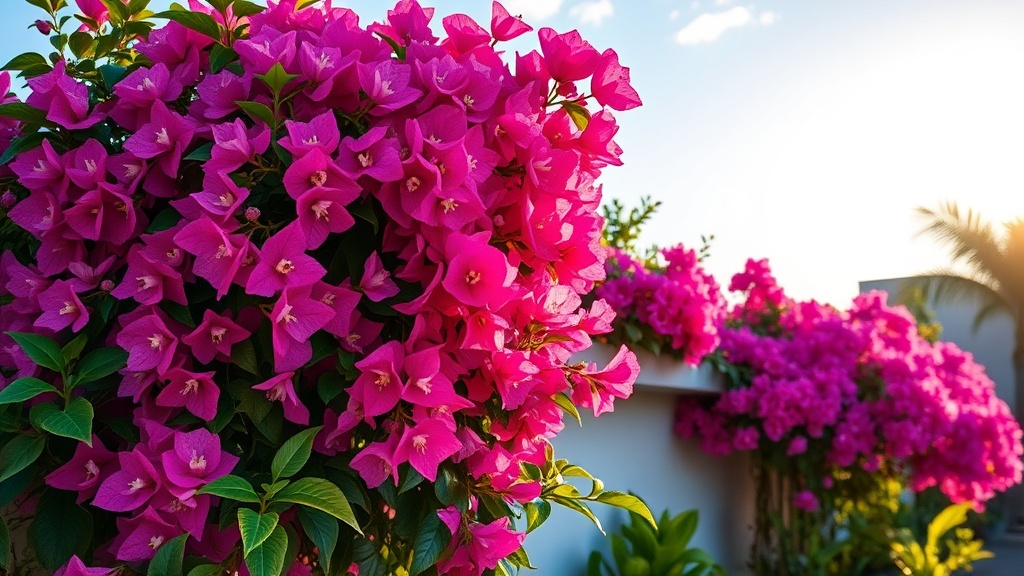
By late January, the side of the garden where the bougainvillea live was transformed. The update I gave Claude on January 31st:
“The bougainvillea is going very well, that side of the garden is sparkling pink and white.”
Not scattered flowers here and there. A wall of color. Pink and white bracts cascading over the terrace edge, so many that I had to invest in a new shop vacuum to clean up the fallen blooms before they clogged the drainage.
A garden problem I’m happy to have.
What I Learned
About bougainvillea: They are the ultimate counterintuitive plant. Every instinct says “water more, feed more” when a plant isn’t performing. Bougainvillea want the opposite. Stress is their signal to shine.
About AI-assisted gardening: Claude didn’t just say “bougainvillea like dry conditions” — which any gardening book would tell you. It analyzed the specific combination of factors: my feeding regimen (too much nitrogen), my watering schedule (too frequent), and then the pH revelation (nutrients locked out). The diagnosis wasn’t one thing; it was three things interacting.
About the garden as a system: The bougainvillea sit on the same terrace as plants that want completely different treatment. The challenge isn’t knowing what each plant needs — it’s remembering to treat neighbors differently. The feeding group system (Group C: DAP + Potash + Ferrous sulfate, every 6–8 weeks, minimal water) solved that.
Current Status
| Aspect | Status |
|---|---|
| Plants | 5 |
| Blooming | Heavy — pink and white |
| Treatment | DAP + Potash + Ferrous sulfate every 6–8 weeks |
| Watering | Less than other plants — intentional stress |
| pH | Correcting toward 6.5–7.0 |
| Biggest lesson | Stop being nice to them |
Part of the AI in the Garden series — documenting what happens when artificial intelligence meets living things.